Wednesday, April 27, 2016

Cross Border Literature Class at Cal State University Channel Islands - Papermaking

It was an honor to return to Cal State University Channel Islands this week for a workshop with their Cross Border Literature class. These students were an incredible group studying works in both English and Spanish that center on life in borderlands. 

For the workshop, we brainstormed, discussed, wrote, and worked with clothing collected from the border.

Our main project was creating paper using recycled pieces of paper and tiny scraps of fabric from the border. Hilariously, we held this wet, messy, and loud process in their campus library. Good thing we had tarps! Students used traditional handmade paper-making techniques to craft sheets of colorful paper.


We also spent time thinking about what kinds of letters, stories, or drawings would appropriately grace these pages. Students spent time writing in English and Spanish about their experiences with the border, experiences of being outsiders, and ideas about patriotism. 


Many thanks to professor Margarita Lopez Lopez and Director of Community Engagement Pilar Pacheco of CSUCI for making this possible.

Tuesday, March 15, 2016

Exhibition: “At Home in the World” and a residency: 516 ARTS in Albuquerque, New Mexico


It was a great privilege (and lots of fun) to spend a week installing quilts, creating new work, and holding a dyeing workshop at the wonderful non-profit art gallery 516 ARTS in Albuquerque. This residency was made possible through the support of the National Performance Network’s Visual Artist Network - an amazing organization focused on small-scale arts organizations working for increased equity.


This was part of a show called “At Home in the World”, featuring 9 artists from around the country and internationally who are working with themes of migration and national identity.

Part of my time there was spent creating a new work, DIY Carpet Shoes. DIY Carpet Shoes is a replication of the slip-on shoe covers used by some migrants crossing the US-Mexico border to avoid leaving footprints. Carpet shoes are often sold to migrants on their way to the border, and can be found discarded or lost near migrant trails. These carpet shoe replications intend to concretize the clandestine nature of border crossings and personalize the many people involved in one person’s crossing, including the shoe’s makers. As a knock-off of an original, DIY Carpet Shoes explores the commodification of emblems of struggle and predicts a possible way that migrants’ history could some day be told. 


DIY Carpet Shoes are made from clothing collected from the US-Mexico border. The clothes were dyed with Albuquerque chamisa, California madder root, and cochineal with the help of participants in a Mending Patriotism workshop at 516 Arts.


Finally, the exhibition included the debut of our video documenting our collaboration with DouglaPrieta Trabajan in making two folklórico skirts with clothing from the border - grateful to all who helped with this project!

So many thanks to the wonderful team at 516 ARTS in Albuquerque. 


Tuesday, November 3, 2015

Bi-national Art Show in tandem with Post-Commodity’s Repellent Fence


This October, I was lucky enough to hop on a train and head out to Arizona to be part of the first bi-national art show in Douglas, Arizona/Agua Prieta, Sonora. The show featured exhibitions, a bi-national art walk, and incredible artists’ talks on working in liminal spaces. Mending Patriotism quilts were featured on both sides of the border. The quilts were on display at the Migrant Resource Center in Agua Prieta, right next to the border wall.


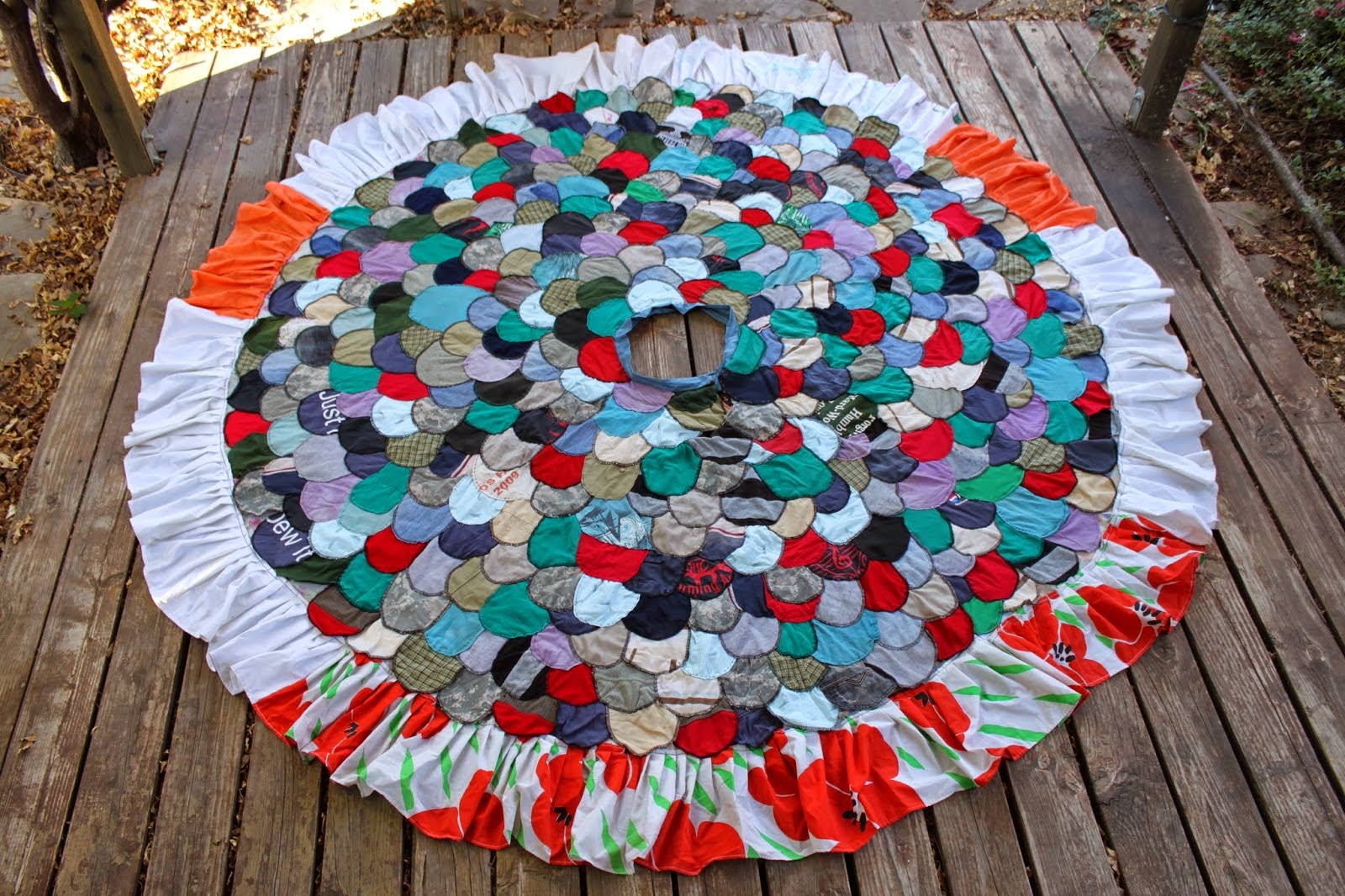
Later the same day, we got to see the first ever performance of both faldas together in the plaza in Douglas, Arizona. It was an emotional moment.


This bi-national art show was in conjunction with the installation of Repellent Fence, a land art piece by Post-Commodity Art Collective. Raven Chacon, Cristobal Martinez, and  Kade L. Twist spoke about their piece, which featured gigantic balloons spanning laterally across the border, as a metaphorical suture across the land. It was a treat to be involved in several days of inflating, tying down, and transporting these enormous seeing eyes.


I heard people who see the border every day say that it changed how they looked at the fence.


Many thanks to Jenea Sanchez for her incredible coordination of the show, to Post-Commodity for their diligent work over the past 8 years (!) to make their installation a reality.


Saturday, August 15, 2015

Spiral: Quilting with Teens


This summer, an amazing group of people came together for one month of learning from the land and each other at Spiral: Young Women's Permaculture Intensive at the glorious Dig In Farm. At Spiral, we invited teens to study permaculture design, wilderness awareness, and social justice.

Besides being one of the most fun, challenging, and rewarding summers of my life, Spiral was also a think-tank for looking at how women and minorities are represented in permaculture and the environmental movement at large. We experimented with how to incorporate social justice and equity teachings into the permaculture curriculum.

As part of this exploration, we worked with clothing from the US-Mexico border to connect on a tactile level with the experiences of border crossing and immigration. We learned about labor in our food system, farm worker's rights, and globalization. Together, we darned holes in migrants clothes and set about designing a quilt. 


Our finished quilt features a women's bra and old-fashioned panties, both found in the desert, against a backdrop of abstract rolling hills formed from large pieces of the clothing. We chose to keep many pieces of the clothing whole or large -- a button here, a pocket there -- so that viewers could recognize the former clothing.


Beyond this, we explored our roles as change-makers in our own communities. The first step in permaculture design is drawn-out observation. We saw that if we apply this to community change-making, we are best suited to making regenerative designs for the communities within which we are already locals!

Many thanks to all the Spiral-ers 2015!


Saturday, May 23, 2015

Workshop at Cafe on A's Acuña Gallery and Cultural Center, Oxnard

Workshop participants explore the "carpet shoes" used by migrants to cover up footprints while crossing the US-Mexico border.

It was a great honor to offer a workshop recently at the Cafe on A's Acuña Gallery and Cultural Center in Oxnard. The workshop was offered to members of the Oxnard Multicultural Mental Health Coalition (OMMH), a group of amazing activists, business owners, mental health workers, and city employees, among other things. These individuals are working to create access to community-defined, culturally appropriate mental health services for under-served Oxnard residents.

Armando Vazquez, one of the directors of Cafe on A and OMMH.

This workshop was the first of a series exploring how community-driven, participatory art and music can contribute to mental health. It included a discussion of US-Mexico border crossings, exploring clothing collected from the border, darning holes in migrants' clothes, and dyeing yarn with locally grown dyes.

Telling the story of where the clothes were collected.

OMMH members shared reactions to encountering the migrants' clothing, and offered personal stories of family migration experiences. 

Sharing stories of the border and reactions to the migrants' clothes.

Participants darned holes in migrants' clothes as part of an ongoing effort to create a patchwork "darned quilt" from the clothes. One participant pointed out a hole that had been darned by someone before these shorts were ever found in the desert!

Shorts collected on the US-Mexico border with a hole mended by BOTH the original owner and a workshop participant.
The original darning, in white, with the new darning around it, sewn with cochineal-dyed yarn (sometimes it comes purple!). 

As part of an ongoing exploration into de-colonizing our fibers, we discussed how we can localize our fiber sources and the labor for them by creating micro-enterprises in Ventura County. We especially focused on cochineal harvesting for natural dyeing, and got to do a test pot with locally-grown cochineal.

Looking at the "tea bag" of cochineal in the dye vat.

Locally-harvested cochineal, which grows on Opuntia species of cacti, like the one in the background.

As the yarn comes out...


The beautiful results! Cochineal has been valuable for centuries for giving this amazing red.

Looking closer at the cochineal beetle.

Getting ready to darn a hole in migrants' clothes with yarn dyed with cochineal.

We enjoyed a potluck and cake for one of the youngest members' 13th birthday!


Happy birthday!

Many thanks to Armando and Debbie, directors of Cafe on A, for organizing this workshop! So many important connections were made.

This workshop was made possible with the support of Cal State Channel Islands Center for Community Engagement - another hearty thank you to Pilar Pacheco!

Last but not at all least, many thanks to Elibet Valencia for these superb photos.

xo
Juna


Sunday, April 19, 2015

Dyeing and Darning Workshop Series - a residency at Cal State Channel Islands


It was a pleasure to do a week-long residency at Cal State University Channel Islands in Camarillo in conjunction with their Cesar Chavez week celebrations. Thank you to Pilar Pacheco of the Center for Community Engagement who made this possible!

The workshops brought together the stories of border crossings and quilts made from migrants clothes. We explored the concept of re-localizing our fiber resources and the traditional skill of darning to mend a hole. We dyed wool with cochineal beetles, darned holes in clothes collected on the border, and discussed how migration and the strength of our local economies are interrelated.

Looking at the cochineal beetle, a source for a brilliant red dye - this jar is filled with cochineal imported from Peru.

The concept of localizing our fiber resources comes to us by way of Rebecca Burgess and Fibershed, a movement that began in northern California as a means to re-establish localized fiber infrastructure, skills, and inspiration. For one year, Rebecca wore only clothing that had been grown, processed, and made within 150 miles of her home. An important part of her work is to connect growers with artisans and mills that can process raw materials into wearable goods. Every year that we outsource these industries we lose more of the infrastructure to create our own products here in the U.S.

The dye vat with Navajo churro sheep yarn inside (one of the oldest breeds of domesticated sheep), and a jar of locally-harvested cochineal beetle in the background.

The tie-in here for me with migration involves Americans taking responsibility for the health of our own communities -- physically, spiritually, and economically. Re-localizing our fiber knowledge and resources means we can rely less on destructive trade relationships while creating models for community self-sufficiency and sustainability. Plus, working with wool and natural dyes is beautiful and addictively fun!

The finished yarn dyed with cochineal!

Beyond brainstorming our potential to create locally-produced clothes and fiber goods, we also practiced our mending skills. Darning is a way to mend a hole (especially in fibers that are knitted or woven). It is essentially creating a tiny weaving over the hole that ends up being even stronger than the surrounding material. I originally learned to do this from the wise old lineage of Youtube, and you can learn to darn too, here. You just need a needle, yarn, and a lightbulb (really!).

CSUCI students darned holes in clothing collected from migrant trails on the US-Mexico border. 
As we worked with the migrants' clothing, we discussed what it felt like to sew on this material and transform it. Many students described feelings of awe and humility. Their finished squares will be sewn together to become a giant crazy quilt of mended holes in migrants' clothes.

Students discussed their reactions to handling migrants' clothing from the border while actively transforming this charged material. The shirt above was found on a migrant trail and reads "Intelligent, On Time".

A student's finished piece! These squares will later be combined into a large crazy quilt showing many people's contributions.

Thankfully, this work is continuing next week with a workshop at the Cafe on A/Acuna Gallery and Cultural Center, an amazing hub for community organizing and activism in Oxnard. This workshop is open to the public! We will gather from 6-8pm on Friday, April 24th to dye, darn, and discuss our local fibershed. Please RSVP if you are coming: mending.patriotism@gmail.com. 

So many thanks to the amazing artist Molly Brolin, who came to assist and took these beautiful pictures.

Thanks again to Cal State University Channel Islands, the single largest supporter of this project, and to the students who wholeheartedly participated in these workshops.



Thursday, February 19, 2015

Announcing a month-long course in sustainability and justice activism

This summer, Mending Patriotism is traveling east!

For a month this July, young women will gather from across the country to learn about farming, sustainable design, and art activism.

Mending Patriotism will serve as an experiential art project and case study for justice activism at Spiral, a month-long, residential permaculture course for young women (ages 15-18) in western Massachusetts.

The program aims to empower young women through regenerative agriculture - we'll be farming, cooking, learning design, and building life-long relationships in a community of leaders. Throughout all this, we'll be learning permaculture, a design process that helps people create systems (be they agricultural, social, financial, or other) that nourish the earth, care for people, and bring a more just world into being.


Growing dinner. (photo by Grace Oedel)


Over the course of a month, we will work as a team to quilt, sew, and dye pieces of clothing left behind by migrants attempting to cross the US-Mexico border. Through this work, we will explore the connections between a globalized economy, agriculture, social and environmental justice, migration, and “women’s work”. The project will offer Spiral participants a way to engage with both social justice and art as important elements of a resilient culture.


A quilt made from migrants' clothes.

...and we will have fun! Do you know a young woman who might like to have an amazing summer, learn to bake bread, carve a spoon, swim in a lake, and laugh while working side-by-side with new friends?

Give us a hoot! Spaces are filling up fast. To find out more about the program, visit http://www.diginfarm.com/program/.

All of this will take place at the glorious Dig In Farm, a 10-acre perennial farmstead and forest, located in western Massachusetts. 

Huge challah! I can almost smell it... (photo by Grace Oedel)


Blueberries harvested with a hand rake! (photo by Grace Oedel)